By role of importance: -
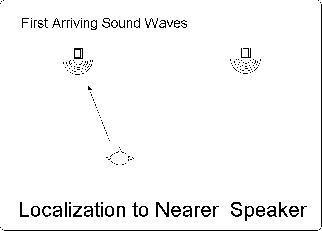
1st - Inter-Aural Time Difference (ITD) = which sound that reach first is the source of direction.
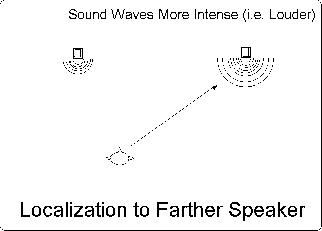
2nd - Inter-Aural Intensity Difference (IID) - which sound is louder, fools the ear & brain to perceive as source of direction.
3rd - Head-Diffraction, l, shadow effect.
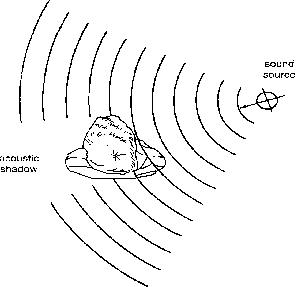
This is high frequency, little perception to the opposite ear, precedence priority given to the exposed ear as high probability of source of direction.
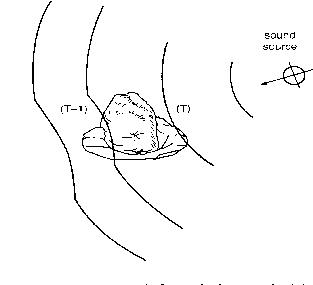
But at low frequency, where the wavelength = l, is “relatively” large, sufficient to envelope both ears, also normally with equal strength???, therefore making localization difficult. In this case, un-conscious mode engage and relies on higher harmonics to Q the source of direction, including the use of ITD and IID above.
- The Human Ears
- Disclaimer
- Questions
- How is sound created?
- How do sound travel?
- How loud is loud?
- How does the ear work?
- How does the ear work 2?
- Hairlike Nerve Died
- How to localize sound?
- What do we listen for - to?
- How do we listen?
- How to differentiate level?
- What sound can be heard or not?
- Regular music frequencies area
- Questions and Answers
- Example of sound in Frequency Domain
- Example of sound in Time Domain
- One prove of human listening in Time Domain
- Conclusion
- A New Thought
- Side notes